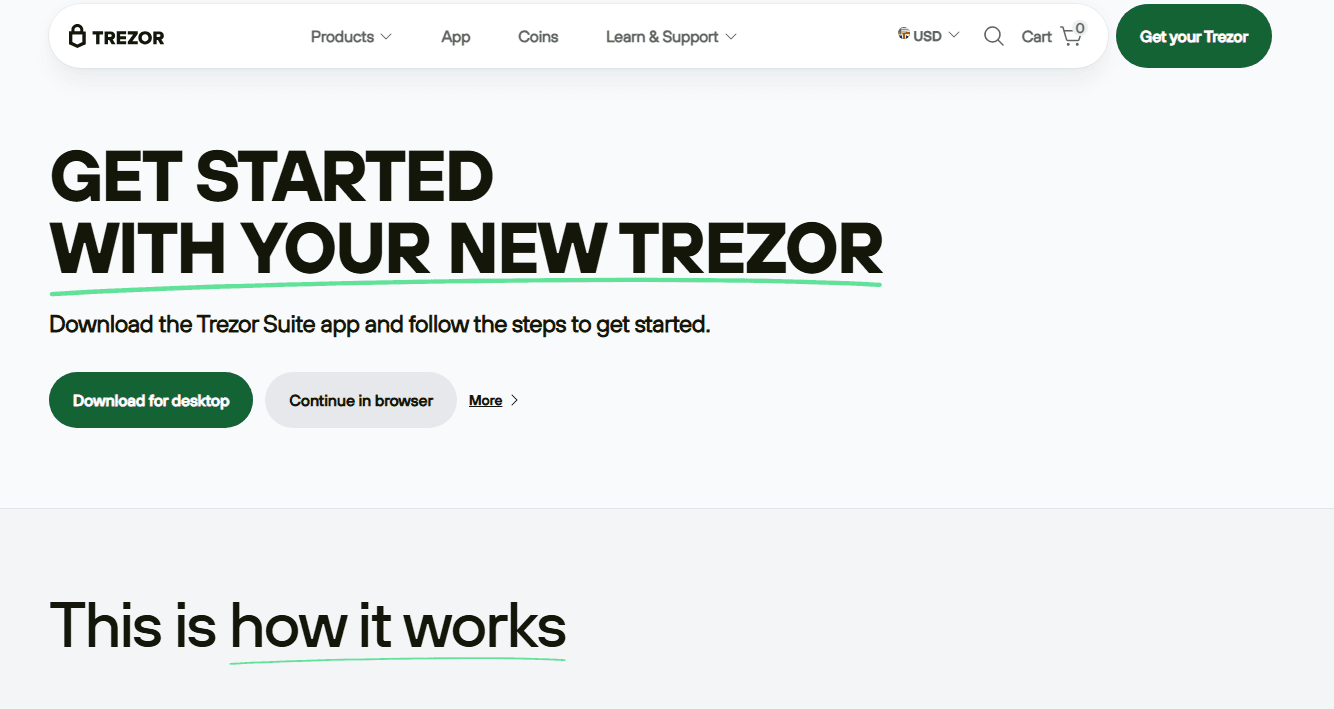
Introduction to Trezor Login
Trezor Login is the gateway to accessing your Trezor hardware wallet, providing users with a secure way to manage cryptocurrency accounts. A Trezor device ensures that private keys remain offline and safe while allowing users to monitor balances, send and receive cryptocurrency, and perform critical wallet operations securely.
Understanding the login process and associated security practices is essential for anyone using a Trezor device. Trezor Login combines usability with strong security measures, ensuring that only authorized users can access and manage their digital assets.
Purpose of Trezor Login
The primary purpose of Trezor Login is to authenticate the user and provide secure access to the wallet. Unlike software-only wallets, a Trezor hardware wallet keeps private keys isolated from the internet, reducing exposure to hacking risks.
Trezor Login ensures that users can verify transactions, access cryptocurrency accounts, and use Trezor Suite safely. It is the critical step that prevents unauthorized access and forms the foundation of digital asset security.
How Trezor Login Works
Logging into a Trezor wallet requires connecting the hardware device to a computer or mobile device and using the Trezor Suite software interface. The process ensures that the private keys never leave the secure environment of the device.
When initiating a login, the user must enter the device PIN. This PIN protects against unauthorized physical access, ensuring that even if the device is lost or stolen, funds remain secure. The device will then interact with Trezor Suite to provide access to account information and allow authorized transactions.
Device Connection
To log in, the Trezor device must be connected to the host device using a USB cable or supported wireless connection. Trezor Suite communicates directly with the device, allowing secure login without exposing sensitive cryptographic information.
It is essential to ensure the host device is free of malware and that only official Trezor software is used. Trezor Login is secure when performed in a trusted environment, protecting the wallet from external threats.
PIN Protection
The device PIN is the first line of defense during login. Users select a secure PIN when initializing their Trezor device, which is required every time they log in.
Trezor Login ensures that PIN entry occurs on the device itself, protecting it from keyloggers or malicious software on the host computer. Users are encouraged to choose a strong, unpredictable PIN and never share it. This step is essential for maintaining wallet security.
Recovery Seed Verification
In addition to the PIN, Trezor Login may involve recovery seed verification during certain operations, such as after device reset or firmware update. The recovery seed is a series of 12 to 24 words that restore wallet access if the device is lost or replaced.
Trezor Login ensures that the recovery seed is only used securely and offline. Users are instructed to store the recovery seed in a secure, offline location and never enter it on untrusted devices or share it with anyone. This measure guarantees that login and recovery processes remain secure.
Accessing Trezor Suite
After successfully logging in, users access Trezor Suite, the official software for managing Trezor wallets. Trezor Login allows users to view balances, monitor transaction history, and interact with multiple cryptocurrency accounts securely.
Trezor Suite integrates with the device to verify transactions, install cryptocurrency applications, and update firmware. Logging in via Trezor ensures that all sensitive operations remain protected by the hardware wallet’s secure environment.
Logging in to Multiple Accounts
Trezor Login enables users to manage multiple cryptocurrency accounts through a single device. Each account is protected by the device’s private keys and verified during login.
This centralized management ensures efficiency and convenience without compromising security. Users can switch between accounts, monitor balances, and initiate transactions while maintaining full protection over private keys.
Security Best Practices for Login
Trezor Login emphasizes several critical security best practices:
Always use a secure and trusted host device.
Keep the PIN confidential and do not share it.
Verify all addresses and transactions on the Trezor device during login.
Never enter recovery seeds on devices or applications outside of the Trezor device.
Keep firmware and software updated to the latest versions.
Following these practices ensures that login remains secure and the wallet is protected from potential threats.
Dealing with Device Loss
If a Trezor device is lost or stolen, the login process is safeguarded by the PIN and recovery seed. Trezor Login allows users to restore access on a new device using the recovery seed.
This ensures continuity of access while maintaining high security. Only users with the correct recovery seed and PIN can regain access, making unauthorized login virtually impossible.
Privacy Considerations
Trezor Login is designed to preserve user privacy. All operations occur locally on the device, and Trezor Suite does not require personal information to log in. Authentication relies on cryptographic verification, keeping users in full control of their financial data.
Logging in securely ensures that no sensitive information is transmitted unnecessarily, maintaining both security and privacy.
Firmware and Software Updates
Occasionally, Trezor Login may require users to update firmware or Trezor Suite. Updates improve security, add new features, and ensure compatibility with additional cryptocurrencies.
During login, the device may prompt users to confirm firmware updates. It is essential to verify updates directly on the device to prevent unauthorized software installation. Properly maintaining firmware ensures that the login process and wallet operations remain secure.
Managing Transactions During Login
Once logged in, users can safely send and receive cryptocurrency. Trezor Login ensures that each transaction is verified on the device, protecting against tampering or malware interference.
When sending cryptocurrency, users review transaction details on the hardware wallet. The device signs the transaction internally, keeping private keys secure. This method guarantees that even after logging in, assets remain protected.
Using Login for Multiple Devices
Trezor Login allows users to access their wallet on multiple devices using the same recovery seed and PIN. This provides flexibility while maintaining security, as all operations are still verified through the hardware wallet.
It is important to perform login only on trusted devices to ensure protection against malware or unauthorized access attempts.
Conclusion
Trezor Login is the secure gateway to managing your Trezor hardware wallet. It protects access to cryptocurrency accounts through a combination of PIN verification, recovery seed protection, and direct device interaction.
By following best practices for login, users can safely access Trezor Suite, manage multiple accounts, and perform transactions with confidence. Trezor Login ensures that private keys remain secure, privacy is maintained, and all operations occur in a trusted environment.
Whether you are a new or experienced user, understanding and following the secure login process is essential for safeguarding your digital assets and enjoying a safe, reliable cryptocurrency management experience.